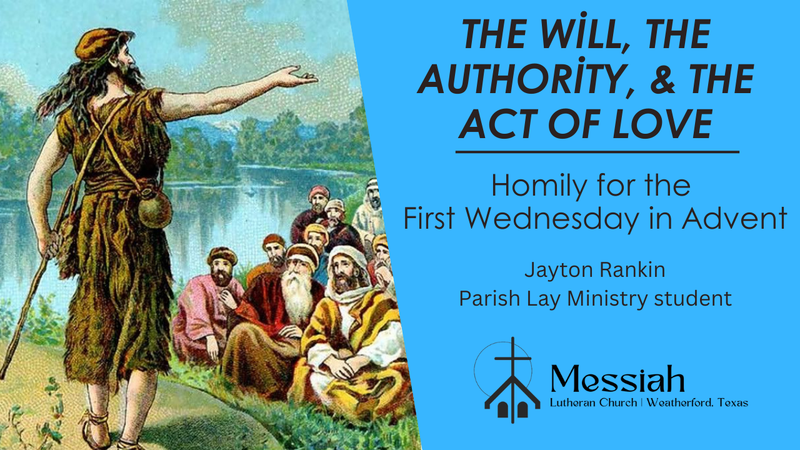
Who actually does the will of the Father—the one who speaks the right words, or the one who acts? Jesus’ parable of the two sons is rooted in a moment of tension, when religious leaders question his authority and find themselves silenced by fear. Unable to answer a direct challenge about John the Baptist, they nevertheless recognize the truth when it is offered through a story.
Parables reveal what direct confrontation often cannot. They create space for understanding where power, fear, and self-protection get in the way. In the same way, God does not remain distant or abstract. In Christ, God comes near—closing the distance between heaven and earth through the Incarnation.
In the season of Advent, this message points toward preparation not only for what is coming, but for what has already begun: God’s love embodied and active in the world. Doing the will of the Father is not about authority or appearance, but about love made visible through action—caring for the sick, welcoming the stranger, and helping even one person when the world’s needs feel overwhelming.
The will of God is ultimately simple and demanding: love God fully, and love your neighbor as yourself.